
CONTENTS
Textbook in History for Class XII

राष्ट्रीय शैक्षिक अनुसंधान और प्रशिक्षण परिषद् NATIONAL COUNCIL OF EDUCATIONAL RESEARCH AND TRAINING
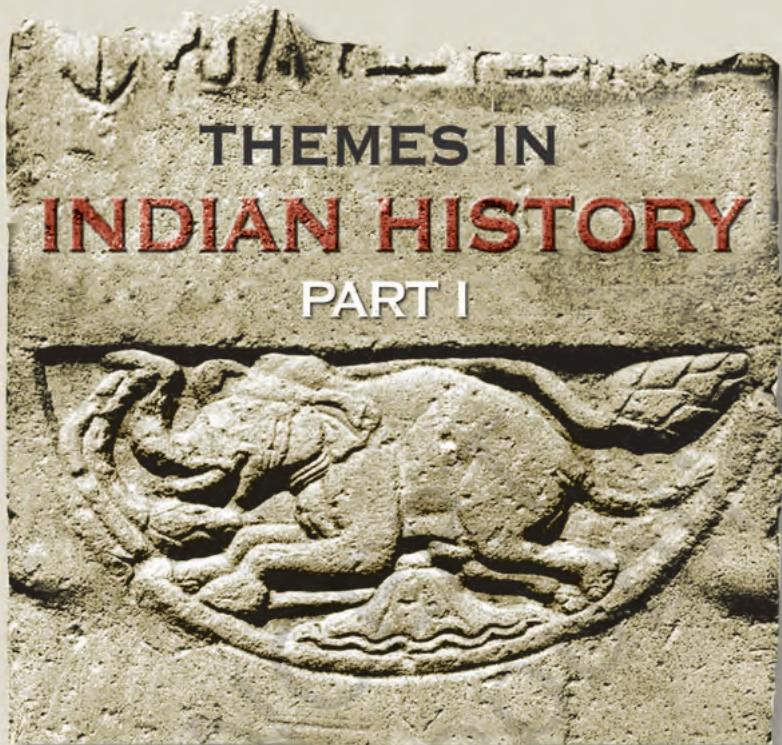
12093 - Themes in Indian History (Part I)
Textbook in History for Class XII
ISBN 81-7450-651-9
First Edition
January 2007 Magha 1928
Reprinted
December 2007, December 2008, January 2010, November 2010, March 2013, December 2014, February 2016, February 2017, December 2017, January 2019, November 2019, January 2021, July 2021 and December 2021
Revised Edition
November 2022 Agrahayana 1944
Reprinted
March 2024 Chaitra 1946 December 2024 Pausha 1946 April 2026 Vaishakha 1948
PD 45T HK
© National Council of Educational Research and Training, 2007, 2022
₹ 105.00
Printed on 80 GSM paper with NCERT watermark
Published at the Publication Division by the Secretary, National Council of Educational Research and Training, Sri Aurobindo Marg, New Delhi 110 016 and printed at Reyanshi Enterprises, Khasra No. 24/20, Nangli Sakrawati, Najafgarh Industrial Area, New Delhi-110043
ALL RIGHTS RESERVED
OFFICES OF THE PUBLICATION DIVISION, NCERT
NCERT Campus Sri Aurobindo Marg
New Delhi 110 016
Phone : 011-26562708
108, 100 Feet Road Hosdakere Halli Extension Banashankari III Stage
Bengaluru 560 085
Phone : 080-26725740
Navjivan Trust Building P.O.Navjivan
Ahmedabad 380 014
Phone : 079-27541446
CWC Campus Opp. Dhankal Bus Stop Panihati
Kolkata 700 114
Phone : 033-25530454
CWC Complex Maligaon
Guwahati 781 021
Phone : 0361-2674869
Publication Team
Head, Publication : M.V. Srinivasan Division
Chief Editor : Bijnan Sutar
Chief Business : Amitabh Kumar Manager
Chief Production : Deepak Jaiswal Officer (In charge)
Production Officer : Sunil Sharma
Cover and Layout
Arrt Creations, New Delhi
Cartography
K Varghese
FOREWORD
The National Curriculum Framework (NCF), 2005, recommends that children's life at school must be linked to their life outside the school. This principle marks a departure from the legacy of bookish learning which continues to shape our system and causes a gap between the school, home and community. The syllabi and textbooks developed on the basis of NCF signify an attempt to implement this basic idea. They also attempt to discourage rote learning and the maintenance of sharp boundaries between different subject areas. We hope these measures will take us significantly further in the direction of a child-centred system of education outlined in the National Policy on Education (1986).
The success of this effort depends on the steps that school principals and teachers will take to encourage children to reflect on their own learning and to pursue imaginative activities and questions. We must recognise that, given space, time and freedom, children generate new knowledge by engaging with the information passed on to them by adults. Treating the prescribed textbook as the sole basis of examination is one of the key reasons why other resources and sites of learning are ignored. Inculcating creativity and initiative is possible if we perceive and treat children as participants in learning, not as receivers of a fixed body of knowledge.
These aims imply considerable change in school routines and mode of functioning. Flexibility in the daily time-table is as necessary as rigour in implementing the annual calendar so that the required number of teaching days are actually devoted to teaching. The methods used for teaching and evaluation will also determine how effective this textbook proves for making children's life at school a happy experience, rather than a source of stress or boredom. Syllabus designers have tried to address the problem of curricular burden by restructuring and reorienting knowledge at different stages with greater consideration for child psychology and the time available for teaching. The textbook attempts to enhance this endeavour by giving higher priority and space to opportunities for contemplation and wondering, discussion in small groups, and activities requiring hands-on experience.
The National Council of Educational Research and Training (NCERT) appreciates the hard work done by the textbook development committee responsible for this book. We wish to thank the Chairperson of the advisory group in Social Sciences Professor Hari Vasudevan and the Chief Advisor for this book, Professor Neeladri Bhattacharya, Centre for Historical Studies, Jawaharlal Nehru University, New Delhi for guiding the work of this committee. Several teachers contributed to the development of this textbook; we are grateful to their principals for making this possible. We are indebted to the institutions and
iv
organisations which have generously permitted us to draw upon their resources, material and personnel. We are especially grateful to the members of the National Monitoring Committee, appointed by the Department of Secondary and Higher Education, Ministry of Human Resource Development under the Chairpersonship of Professor Mrinal Miri and Professor G.P. Deshpande, for their valuable time and contribution. As an organisation committed to the systemic reform and continuous improvement in the quality of its products, NCERT welcomes comments and suggestions which will enable us to undertake further revision and refinement.
Director
New Delhi
20 November 2006
National Council of Educational
Research and Training
RATIONALISATION OF CONTENT IN THE TEXTBOOKS
In view of the COVID-19 pandemic, it is imperative to reduce content load on students. The National Education Policy 2020, also emphasises reducing the content load and providing opportunities for experiential learning with creative mindset. In this background, the NCERT has undertaken the exercise to rationalise the textbooks across all classes. Learning Outcomes already developed by the NCERT across classes have been taken into consideration in this exercise.
Contents of the textbooks have been rationalised in view of the following:
This present edition, is a reformatted version after carrying out the changes given above.
THE CONSTITUTION OF INDIA
PREAMBLE
WE, THE PEOPLE OF INDIA, having solemnly resolved to constitute India into a [SOVEREIGN SOCIALIST SECULAR DEMOCRATIC REPUBLIC] and to secure to all its citizens :
JUSTICE, social, economic and political;
LIBERTY of thought, expression, belief, faith and worship;
EQUALITY of status and of opportunity; and to promote among them all
FRATERNITY assuring the dignity of the individual and the [unity and integrity of the Nation];
IN OUR CONSTITUENT ASSEMBLY this twenty-sixth day of November, 1949 do HEREBY ADOPT, ENACT AND GIVE TO OURSELVES THIS CONSTITUTION.
DEFINING THE FOCUS OF STUDY
What defines the focus of this book? What does it seek to do? How is it linked to what has been studied in earlier classes?
In Classes VI to VIII we looked at Indian history from early beginnings to modern times, with a focus on one chronological period in each year. Then in the books for Classes IX and X, the frame of reference changed. We looked at a shorter period of time, focusing specifically on a close study of the contemporary world. We moved beyond territorial boundaries, beyond the limits of nation states, to see how different people in different places have played their part in the making of the modern world. The history of India became connected to a wider inter-linked history. Subsequently in Class XI we studied Themes in World History, expanding our chronological focus, looking at the vast span of years from the beginning of human life to the present, but selecting only a set of themes for serious exploration. This year we will study Themes in Indian History.
The book begins with Harappa and ends with the framing of the Indian constitution. What it offers is not a general survey of five millennia, but a close study of select themes. The history books in earlier years have already acquainted you with Indian history. It is time we explore some themes in greater detail.
In choosing the themes we have tried to ensure that we learn about developments in different spheres – economic, cultural, social, political, and religious – even as we attempt to break the boundaries between them. Some themes in the book will introduce you to the politics of the time and the nature of authority and power; others explore the way societies are organised, and the way they function and change; still others tell us about religious life and ritual practices, about the working of economies, and the changes within rural and urban societies.
Each of these themes will also allow you to have a closer look at the historians' craft. To retrieve the past, historians have to find sources that make the past accessible. But sources do not just reveal the past; historians have to grapple with sources, interpret them, and make them speak. This is what makes history exciting. The same sources can tell us new things if we ask new questions, and engage with them in new ways. So we need to see how historians read sources, and how they discover new things in old sources.
But historians do not only re-examine old records. They discover new ones. Sometimes these could be chance discoveries. Archaeologists may unexpectedly come across seals and mounds that provide clues to the existence of a site of an ancient civilisation. Rummaging through the dusty records of a district collectorate a historian may trip over a bundle of records that contain legal cases of local disputes, and these may open up a new world of village life several centuries back. Yet are such discoveries only accidents? You may bump into a bundle of old records in an archive, open it up and see it, without discovering the significance of the source. The
viii
source may mean nothing to you unless you have relevant questions in mind. You have to track the source, read the text, follow the clues, and make the inter-connections before you can reconstruct the past. The physical discovery of a record does not simply open up the past. When Alexander Cunningham first saw a Harappan seal, he could make no sense of it. Only much later was the significance of the seals discovered.
In fact when historians begin to ask new questions, explore new themes, they have to often search for new types of sources. If we wish to know about revolutionaries and rebels, official sources can reveal only a partial picture, one that will be shaped by official censure and prejudice. We need to look for other sources – diaries of rebels, their personal letters, their writings and pronouncements. And these are not always easy to come by. If we have to understand experiences of people, then oral sources might reveal more than written sources.
As the vision of history broadens, historians begin tracking new sources, searching for new clues to understand the past. And when that happens, the conception of what constitutes a source itself changes. There was a time when only written records were acknowledged as authentic. What was written could be verified, cited, and cross checked. Oral evidence was never considered a valid source: who was to guarantee its authenticity and verifiability? This mistrust of oral sources has not yet disappeared, but oral evidence has been innovatively used to uncover experiences that no other record could reveal.
Through the book this year, you will enter the world of historians, accompany them in their search for new clues, and see how they carry on their dialogues with the past. You will witness the way they tease out meaning out of records, read inscriptions, excavate archaeological sites, make sense of beads and bones, interpret the epics, look at the stupas and buildings, examine paintings and photographs, interpret police reports and revenue records, and listen to the voices of the past. Each theme will explore the peculiarities and possibilities of one particular type of source. It will discuss what a source can tell and what it cannot.
This is Part I of Themes in Indian History, Parts II and III will follow.
NEELADRI BHATTACHARYA
Chief Advisor, History
TEXTBOOK DEVELOPMENT COMMITTEE
CHAIRPERSON, ADVISORY COMMITTEE
Hari Vasudevan, Professor, Department of History, University of Calcutta, Kolkata
CHIEF ADVISOR
Neeladri Bhattacharya, Professor, Centre for Historical Studies, Jawaharlal Nehru University, New Delhi (Theme 9)
ADVISORS
Kumkum Roy, Associate Professor, Centre for Historical Studies, Jawaharlal Nehru University, New Delhi (Theme 2)
Monica Juneja, Guest Professor, Institut Furgeschichte, Vienna, Austria
TEAM MEMBERS
Beeba Sobti, P.G.T. History, Modern School, Barakhamba Road, New Delhi C.N. Subramaniam, Eklavya, Kothi Bazar, Hoshangabad (Theme 7)
Farhat Hassan, Reader, Department of History, Aligarh Muslim University, Aligarh, UP (Theme 5)
Jaya Menon, Reader, Department of History, Aligarh Muslim University, Aligarh, UP (Theme 1)
Kunal Chakrabarti, Professor, Centre for Historical Studies, Jawaharlal Nehru University, New Delhi (Theme 3)
Meenakshi Khanna, Reader in History, Indraprastha College, University of Delhi, Delhi (Theme 6)
Muzaffar Alam, Professor of South Asian History, University of Chicago, Chicago, USA
Najaf Haider, Associate Professor, Centre for Historical Studies, Jawaharlal Nehru University, New Delhi
Partho Dutta, Reader, Department of History, Zakir Hussain College (Evening Classes), University of Delhi, Delhi
Prabha Singh, P.G.T. History, Kendriya Vidyalaya, Old Cantt., Telliarganj, Allahabad, UP
Rajat Datta, Professor, Centre for Historical Studies, Jawaharlal Nehru University, New Delhi (Theme 8)
Ramachandra Guha, freelance writer, anthropologist and historian, Bangalore (Theme 11)
Rashmi Paliwal, Eklavya, Kothi Bazar, Hoshangabad
Rudrangshu Mukherjee, Executive Editor, The Telegraph, Kolkata (Theme 10)
Smita Sahay Bhattacharya, P.G.T. History, Blue Bells School, Kailash Colony, New Delhi
Sumit Sarkar, Formerly Professor of History, University of Delhi, Delhi (Theme 12)
Uma Chakravarti, Formerly Reader in History, Miranda House, University of Delhi, Delhi (Theme 4)
Vijaya Ramaswamy, Professor, Centre for Historical Studies, Jawaharlal Nehru University, New Delhi (Theme 7)
MEMBER-COORDINATORS
Anil Sethi, Professor, DESS, NCERT, New Delhi Seema S. Ojha, Lecturer, DESS, NCERT, New Delhi
ACKNOWLEDGEMENTS
Themes in Indian History, Part I emerged out of several discussions within the team amongst subject experts/ authors from universities, school teachers and professionals from NCERT. We would like to thank all those who participated enthusiastically and pooled together their intellectual resources and experience to produce this book.
Several people commented extensively on draft chapters, helping us improve on the text and clarify issues. We are particularly grateful to our young readers, Meera and Sandhya Visvanathan whose suggestions and comments helped us sharpen the presentation, and to Baisakh Chakrabarti for his encouragement. The suggestions of the members of the Monitoring Committee, Prof. J. S. Grewal and Ms Shobha Bajpai, were very useful.
Prof. B.D. Chattopadhyaya made time for the project inspite of several pressing personal problems, and offered critical advice. Others who offered valuable suggestions include Prof. Ranabir Chakravarti, Prof. Upinder Singh and Dr Supriya Varma. We are also grateful to Dr Naseem Akhtar, Mr Virendra Bangroo and Dr Suresh Mishra for advice on specific visuals and texts. Ms Samira Verma provided unfailingly prompt support for visual and textual research.
We would like to thank all the institutions and individuals who provided the visual resources for the book: the American Institute of Indian Studies, Gurgaon, the Archaeological Survey of India, the Centre for Cultural Resources and Training, the Indira Gandhi National Centre for the Arts, the National Manuscript Mission, and the National Museum. We are particularly grateful to Prof. Gregory L. Possehl for visual material used in Theme One, and to Mr. R.R.S. Chauhan and Mr. J.C. Grover, National Museum, as also to Mr. R.C. Das, CIET, NCERT for photographs from the National Museum. Mr. K. Varghese, Jawaharlal Nehru University, provided the maps.
Ms Shyama Warner copyedited and proof read the book while Ms Ritu Topa and Mr. Animesh Roy of Arrt Creations, New Delhi, designed it. We would like to thank them all for the patience, care, and passion they brought to the task.
We would also like to thank Mr. Albinus Tirkey and Mr. Manoj Haldar for technical support and assistance.
Finally, we look forward to feedback from the users of the book, which will help us improve it in subsequent editions.
The review committee members for the rationalisation of the content of this textbook are Umesh Ashok Kadam, Centre for Historical Studies, JNU, New Delhi; Sunil Kumar Singh, PGT History, Kendriya Vidyalaya; Krishna Ranjan, PGT History, Kendriya Vidyalaya; Archana Verma, Dept. of History, Hindu College, University of Delhi; Shruti Mishra, PGT History, HoD, History, Delhi Public School; Gouri Srivastava, Head, DESS; Pratyusa K. Mandal, DESS, NCERT; Mily Roy Anand, Seema S. Ojha, Sharad K. Pandey, DESS, NCERT.
PART I
THEME ONE 1
BRICKS, BEADS AND BONES
The Harappan Civilisation
THEME TWO 28
KINGS, FARMERS AND TOWNS
Early States and Economies
(c.600 BCE-600 CE)
THEME THREE 53
KINSHIP, CASTE AND CLASS
Early Societies
(c. 600 BCE-600 CE)
THEME FOUR .....82
THINKERS, BELIEFS AND BUILDINGS
Cultural Developments
(c. 600 BCE-600 CE)
PART II*
THEME FIVE
THROUGH THE EYES OF TRAVELLERS:
Perceptions of Society
(c. tenth to seventeenth centuries)
THEME SIX
BHAKTI -SUFI TRADITIONS:
Changes in Religious Beliefs and Devotional Texts
(c. eighth to eighteenth centuries)
THEME SEVEN
AN IMPERIAL CAPITAL: VIJAYANAGARA
(c. fourteenth to sixteenth centuries)
THEME EIGHT
PEASANTS, ZAMINDARS AND THE STATE:
Agrarian Society and the Mughal Empire
(c. sixteenth-seventeenth centuries)
PART III*
THEME NINE
COLONIALISM AND THE COUNTRYSIDE:
Exploring Official Archives
THEME TEN
REBELS AND THE RAJ:
1857 Revolt and its Representations
THEME ELEVEN
MAHATMA GANDHI AND THE
NATIONALIST MOVEMENT:
Civil Disobedience and Beyond
THEME TWELVE
FRAMING THE CONSTITUTION:
The Beginning of a New Era
*Parts II and III will follow
HOW TO USE THIS BOOK
This is Part I of Themes in Indian History, Parts II and III will follow.
These contain:
Short meanings
Additional Information
More elaborate definitions
These are meant to assist and enrich the learning process, but are not intended for evaluation.
Sources
(c) Sources are enclosed within separate boxes: these contain excerpts from a wide variety of texts and inscriptions. Both visual and textual sources will help you acquire a feel for the clues that historians use. You will also see how historians analyse these clues. The final examination can include excerpts from and/or illustrations of identical/similar material, providing you with an opportunity to handle these.
√ There are two categories of intext questions:
(a) those within a yellow box, which may be used for practice for evaluation.
(b) those with the caption ➔ Discuss... which are not for evaluation
√ There are four types of assignments at the end of each chapter:
These include:

short questions

short essays

map work

projects
These are meant to provide practice for the final assessment and evaluation.
Hope you enjoy using this book.